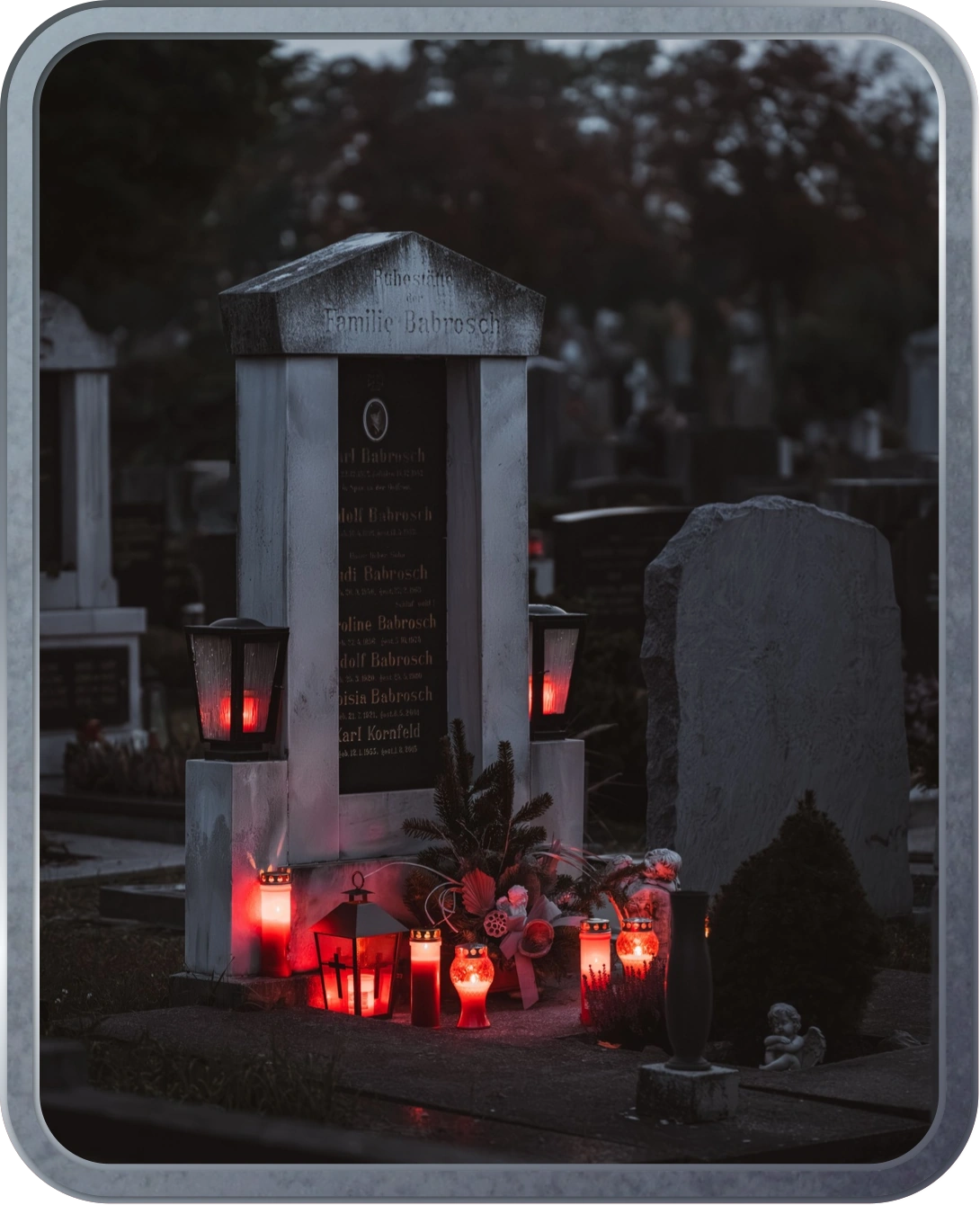
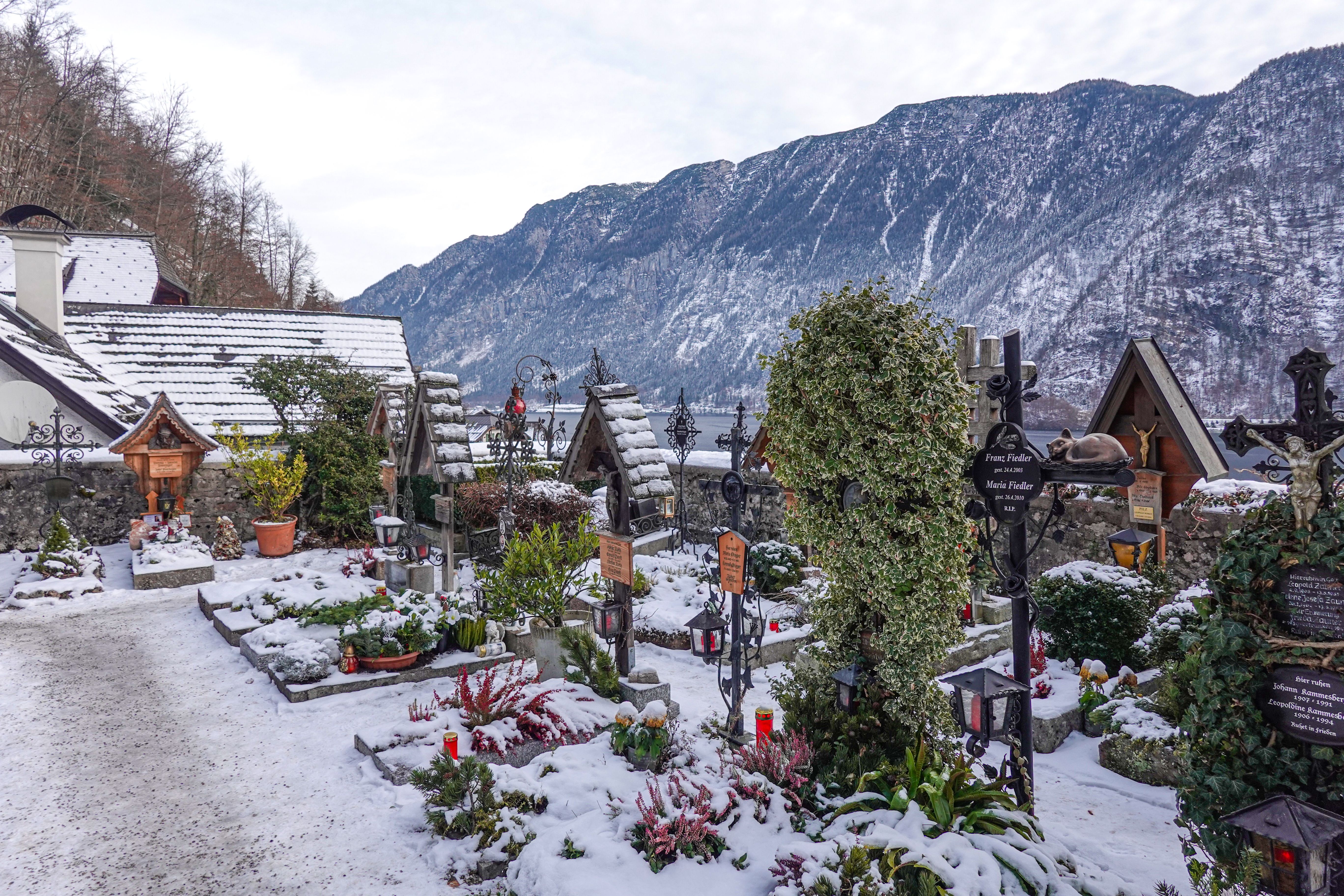
Every year until well into my teens, I found myself standing at my grandparents’ grave on November 1. In Austria, November 1 is a public holiday called Allerheiligen, or All Saints’ Day. Traditionally, people go to the cemetery and partake in a huge Catholic Church fanfare for the dead. The cemetery was always so packed that you could not find parking anywhere in town that morning. Everyone was there. A brass band played unbelievably depressing music, the priest walked between the graves mumbling prayers in a monotone voice and the smell of frankincense hung in the air. Every grave was decorated with flowers and candles.
My grandparents on my dad’s side died long before I was born, so my mom and I had absolutely no emotional connection to them or to the grave we were standing around. My dad did not particularly care to be there either, but his sister, my aunt, did. It felt in general socially expected to be there, so there we were. Year after year. Mom and I always found the whole thing quite creepy. The weather was often foggy, wet, and windy, which added considerably to the eerie atmosphere. It was not a lively celebration of the dead like Día de los Muertos in Mexico, but then again, I don't remember anything in the Catholic Church ever being particularly lively. I still remember feeling relieved that I had no emotional connection to my dead grandparents. The thought of experiencing actual grief in such a heavy setting seemed unbearable.
All Saint’s is for Saints, All Soul’s for Everyone Else
The strange thing is that All Saints’ Day is not technically meant to commemorate the ordinary dead at all. That is what All Souls’ Day on November 2 is for. But November 1 is a public holiday, while November 2 is not. Holding the grave blessing on All Saints’ Day therefore ensures that most people can attend. As I am writing this, I am thinking how typical it is that the day when we officially remember and pray for the saints is a holiday, while the day for the “normal people” is not. Go figure.
Annual celebrations of Christian martyrs and saints already existed by the fourth century, although they were not yet held everywhere on the same date. That came later, when Rome established November 1 as the day to celebrate and remember all saints. All Souls came later. Around the end of the tenth century, Abbot Odilo of Cluny introduced a commemoration on November 2 for all faithful Christians who had died and whose souls were believed to still be undergoing purification. The prayers and masses of the living could supposedly reduce their suffering and help them move on. There is actually a neat story about how Odilo came to establish All Souls’ Day.
How Complaining Demons Inspired All Souls’ Day
According to the story, a monk returning from Jerusalem was stranded on a remote island, where he encountered a hermit. The hermit told him about a nearby place that violently spewed fire and where the souls of sinners were purified through terrible torments. This place was later associated with Mount Etna. The hermit could also hear demons complaining bitterly about Abbot Odilo and the monks of Cluny. Their continual prayers and almsgiving were apparently so effective that souls kept escaping from the demons’ punishment. When the traveller finally returned home, he told Odilo what he had heard. Odilo then ordered the monasteries connected to Cluny to commemorate all faithful departed on November 2 with prayers, masses and generous almsgiving.
The Allerheiligen Nobody Told Me About
All Saints and All Souls are deeply Christian festivals, but many of the folk traditions surrounding them do not fit neatly into official Catholic teaching. In folk belief, the dead were not distant souls simply waiting for prayer. They returned to their former homes, moved through the autumn wind, demanded food and warmth and retained certain rights over the living.
Even though I grew up in Austria and participated in the Allerheiligen cemetery ritual many times, I never understood where it came from or what existed beneath the visible church ceremony. To be honest, I also never cared. It was a lame church thing, and I had no particular interest in anything connected to the Catholic Church. My original intention with this article was simply to look at the overlap between Samhain, Halloween, All Saints, and All Souls. What surprised me was how many folk traditions existed around these Christian “death days” in Austria and the surrounding regions, and how little they resembled the official version I grew up with. The Poor Soul in these old stories and customs is a strange mixture. It suffers in the Church’s purgatory but behaves like a returning spirit from folk tradition.
According to one widespread belief, the ringing of the church bells on All Saints’ Day released the Arme Seelen, or Poor Souls, from purgatory. The exact time and duration differed from place to place. In some regions, an hour of ringing in the afternoon or evening marked the beginning of their temporary freedom. The souls were then permitted to walk the earth until the bells called them back the following morning.
People lit small lamps called Seelenlichtlein, or soul lights. These lights could guide the souls home or assure a forgotten soul that someone still remembered them. In some parts of Austria, the lamps were filled with lard so that souls suffering from the hot fires of purgatory could use the fat to treat their burns. Considering that people imagined the Poor Souls as burned and injured by the fires of purgatory, this makes a strange sort of sense. There was, however, another belief that makes much less sense to me, and I found no real explanation for it. Some souls were said to suffer the kalte Pein, which translates to “cold torment.” People believed that one of the punishments of purgatory was a terrible cold that could be even worse than its fire. For these souls, the household kept the stove or fireplace burning throughout the night so they could come inside and warm themselves.
The forms taken by the Poor Souls also differed considerably. Some accounts imagined them as invisible human spirits. Others described them as lights, flames, shadows or animals. Toads are mentioned especially often. Since the souls might be moving invisibly through houses and farms, people avoided allowing gates to slam shut in case a Poor Soul was caught and crushed inside.
Other traditions spoke of the Allerseelenwind, the All Souls wind. This is a concept I found the most interesting and resembled much older pagan stories. Strong autumn storms are common at this time of year, and people imagined the Poor Souls moving within them. The wind howled, rattled the windows and tore at the house because the dead were returning. Forgotten souls could be especially restless. They might knock against windows or scratch plaster from the walls.
And, of course, the returning souls were hungry. People baked special pastries and breads and left them on the table overnight with a bowl or glass of milk. The table might be cleared, blessed with holy water and left undisturbed as a safe resting place. Windows and doors were sometimes left open to make sure the souls could enter their former homes. The household’s future could be read through the behaviour of the dough. A beautiful, well-risen bread promised luck and success during the coming year. A collapsed or badly risen one warned of hardship.
The Küchl Belonged to the Dead
According to a Tyrolean legend, a poor traveller sought shelter at a farm called the Haselrasterhof on All Saints’ Day. The family let him sleep on the warm bench beside the stove but warned him not to touch the Küchl (small fried pastries) they had left on the table for the Poor Souls. Eventually, his hunger got the better of him. He said a prayer for the souls and ate the pastries. Later that night, the dead entered the farmhouse and gathered around the table. They told the terrified traveller that his prayer was the only thing that had saved him from being torn apart.
The poor souls did not simply wait around for prayers. They still had certain rights over the living. They had to be remembered, admitted into the house, given warmth and offered food. If the living failed to fulfil these duties, they could expect anger or punishment from the dead. In the worst stories, mistreating or stealing from the souls could lead to the offender’s own death.
Bread for the Poor Souls: The Allerseelen-Heischegang
One tradition I had never heard of before, and which I found especially interesting, was the Allerseelen-Heischegang.
I already mentioned the special breads and pastries baked around this time, known by names such as Seelenwecken, Seelenzelten, Spitzl and Allerheiligenstriezel.
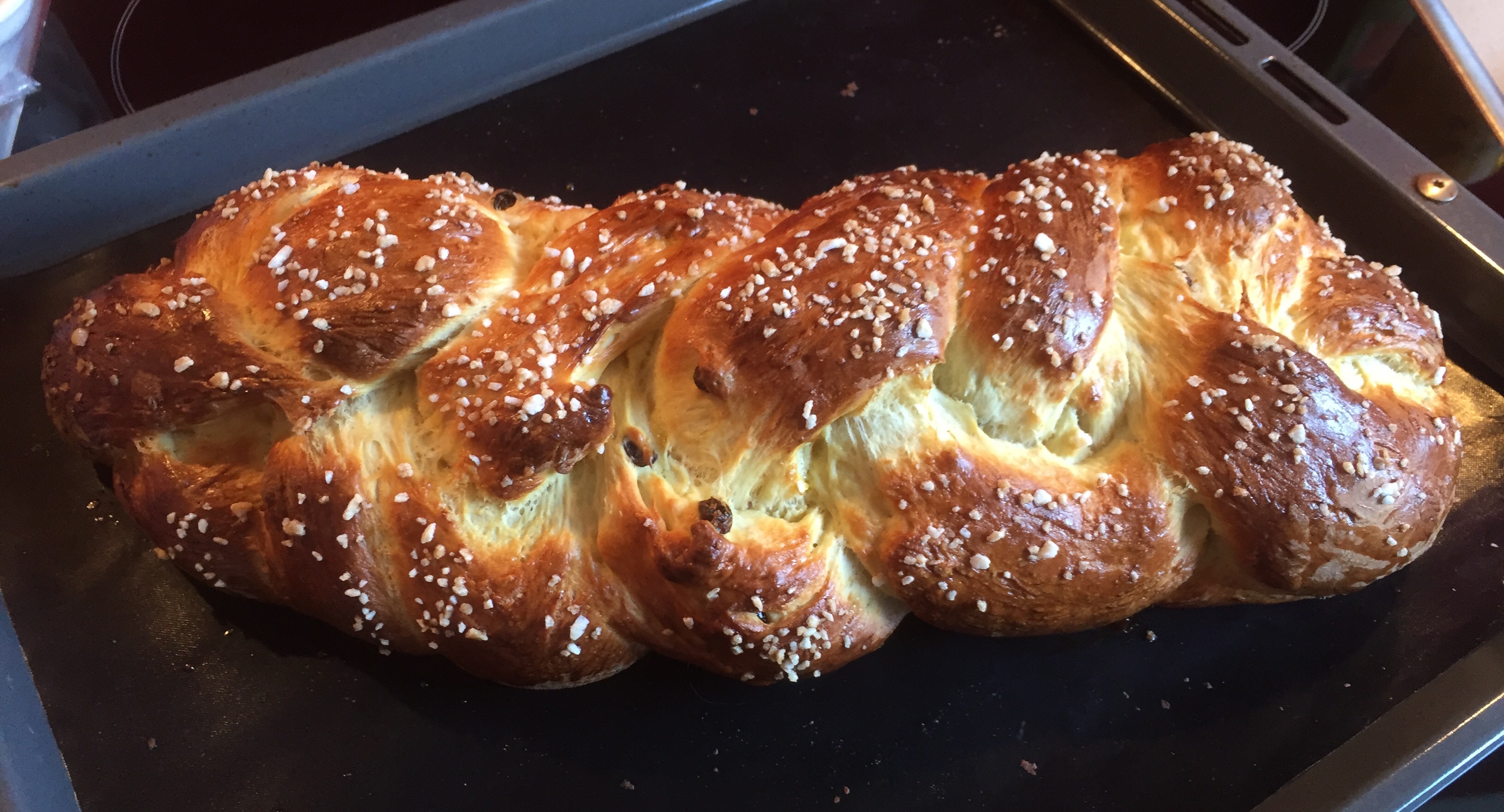 During the Heischegang, poor people and children went from house to house asking for these breads. Large farms sometimes baked between 300 and 500 small loaves for the visitors. A child could collect enough bread to provide a poor family with a significant part of its winter supply. In return for the bread, the recipient prayed for the Poor Souls or said something along the lines of:
May God reward you for the sake of the Poor Souls.
This was more than a polite expression of gratitude. The prayer and blessing were thought to genuinely help the dead. The household giving the bread received protection, luck and blessings in return. Having a large number of visitors could even be seen as a good sign that promised a prosperous year ahead. So calling it charity does not quite cover it. The giver provided bread and the recipient provided a religious service. Both received something from the exchange, and the Poor Souls supposedly benefited as well. Local authorities eventually began treating the custom as an irritating form of begging. Children sometimes missed school for several days while collecting bread, and even people who were not particularly poor began joining the procession. The local population did not necessarily see it that way. To them, it was a traditional right. The visitors did not always humbly ask for a donation but sometimes demanded the gift as something owed to them by custom. A district official complained in 1901 that the offerings were being claimed almost as if they were a formal debt. Some scholars have interpreted the children and poor people as living stand-ins for the returning souls. By feeding them, the household symbolically fed the dead.
The All Souls Heischegang eventually disappeared. More organised systems of helping the poor reduced the need to collect bread, while belief in the power of prayer to help a soul in purgatory also began to fade. Without that religious exchange, the custom increasingly looked like ordinary begging and became much harder to preserve.
From Soul Cakes to Trick-or-Treating
A closely related custom existed in parts of England under the name souling. Poor people, and later children, went from house to house asking for soul cakes in return for prayers for the family’s dead. Both customs sound remarkably similar to modern American trick-or-treating. The main difference is that soulers and All Souls visitors were not normally required to wear costumes. The costumes came from another tradition known as guising. In Ireland and Scotland, disguised visitors went from house to house, performed songs, verses or small tricks, and received food or money in return. Irish and Scottish immigrants carried these customs to North America. There, guising, souling, seasonal pranks and Halloween parties gradually became mixed together.
It Was Never Just a Church Thing
I expected to find a simple pagan festival hiding underneath Allerheiligen, with Christianity painted over the top. Instead, I found something much messier and, in my opinion, much more interesting. Official Catholic teachings existed alongside local beliefs, and people do not seem to have worried much about where one ended and the other began. A soul could be suffering in purgatory while also returning home as a ghost. Church bells released it, holy water soothed it and the warmth of the fireplace helped with its punishment. It could eat the bread left on the table, benefit from a poor child’s prayer and become angry if the living forgot their obligations.
Looking back, I realise that I only ever saw the public, respectable part of the tradition. We still had the band, the priest, the incense, the flowers and the candles, but nobody told me about the souls wandering in the wind, warming themselves at the stove or waiting for bread on the table.
Had anyone told me that part as a child, I might have found Allerheiligen much less lame.
Sources
- Zingerle, Ignaz Vinzenz. Sitten, Bräuche und Meinungen des Tiroler Volkes. Innsbruck, 1871. Digitized by Universitäts- und Landesbibliothek Tirol.
- Keller, Irene and Christian. Glaube? Aberglaube? Volksfrömmigkeit / Gelehrtenmagie: Facetten des (Aber)glaubens in Oberösterreich. Kulturgut Hausruck, 2014.
- Baumgarten, P. Amand. Aus der volksmässigen Ueberlieferung der Heimat. Linz: Museum Francisco-Carolinum, 1869.
- Storl, Wolf-Dieter. Samhain und seine Bedeutung bei den Kelten.
~ PICTURES FROM TOP TO BOTTOM ~
- Photo by Ahmet Yüksek via Pexels.
- weisserstier. “20161101 Striezel 005.” Photograph, 2016. CC BY 2.0. Via Wikimedia Commons.
- Photo by Magda Ehlers via Pexels.