The first thing I realised while researching weather magic was that our farmer neighbours are basically protecting their fields against witchcraft. I am sure they would disagree with this observation but the history books are on my side. Every spring right after Palm Sunday, bundles of green branches tied around a stick show up in the corners of the fields in our neighborhood. They are called Palmbuschen and normally you make them before Easter and then you bring them to church for the Palm blessing. Afterwards they go into the fields.
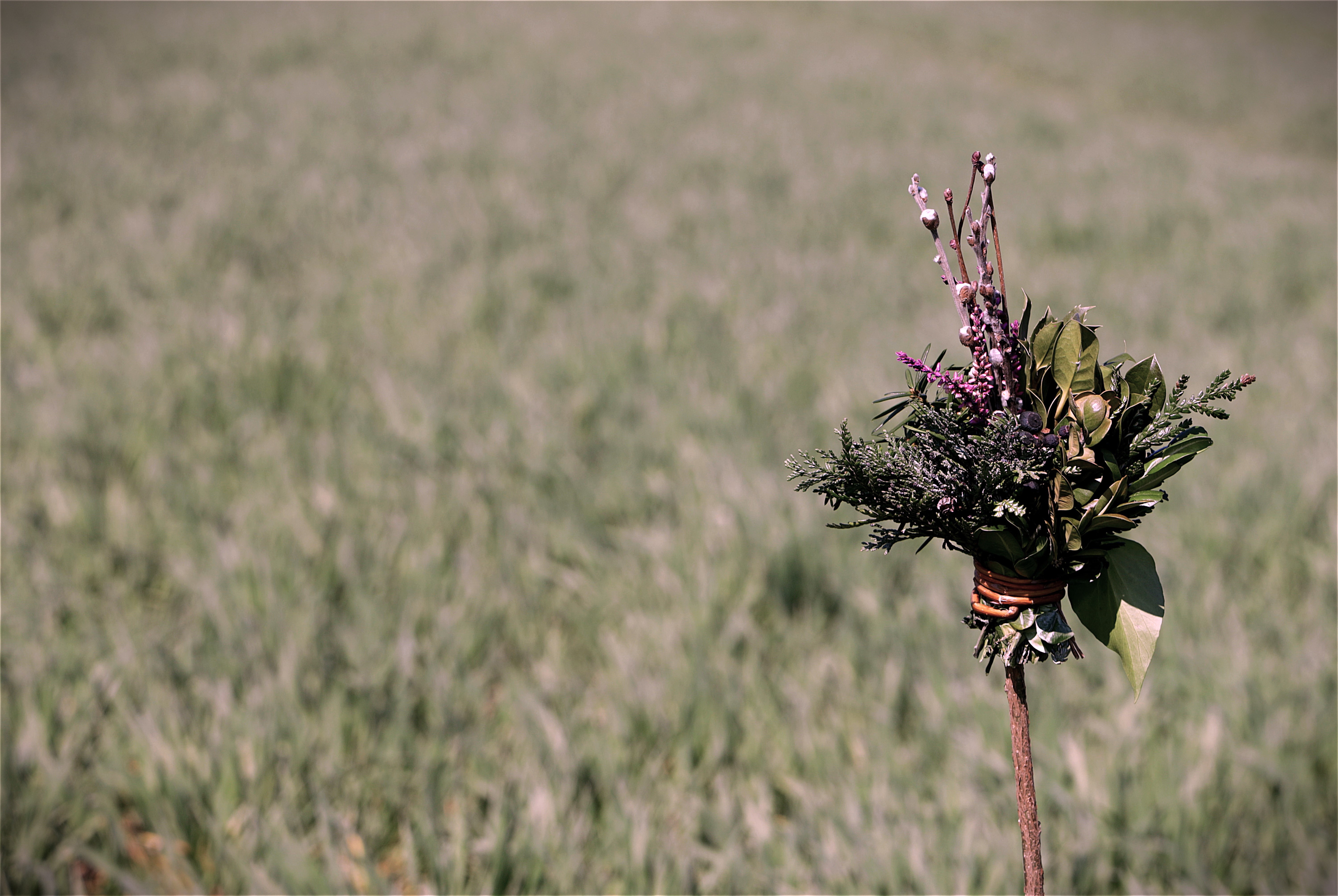 I have seen them for years without thinking much about what they were supposed to be doing there. Today they are generally seen as a Christian blessing for the field and the coming harvest. In older sources however the blessed Palmbuschen were put into meadows and grain fields to protect against hail. Some people even copied the beginning of the Gospel of John three times, tied the three copies to three Palmbuschen, had the whole thing blessed and put one into each field.
WETTERMACHEN
Making and directing the weather
Every year in summer I transport (well, in reality I manage the transport. Jesse transports) a lot of my favorite potted plants to safety when they forecast heavy thunderstorms with the possibility of hail. 9 out of 10 times absolutely nothing happens. Jesse says ‘I told you it wouldn’t hail’ while he drags all the plants out again. It’s a whole rigmarole all summer long and I am just trying to protect some cute flowers. Now imagine your entire existence depends on it (if you are a farmer today, you can probably still relate to that in some sense). In my case it just means a few ruined hydrangeas, but back then a bad storm could take away a large part of what a household was going to eat throughout the year and in some cases it could even prevent the farmer from collecting enough seed for the next year’s crops.
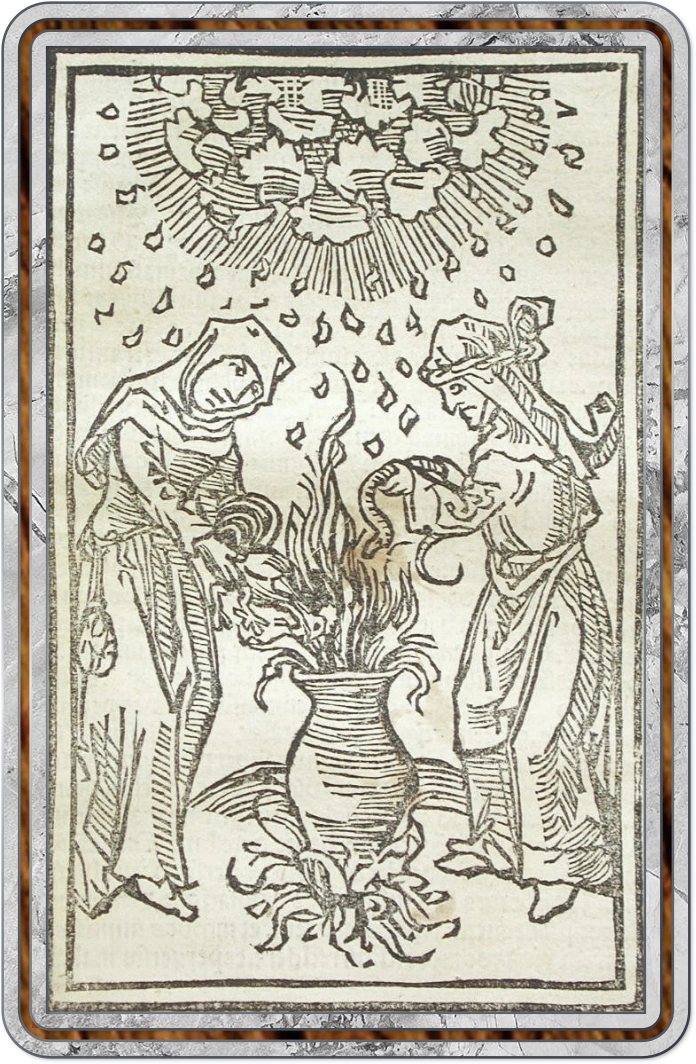
With this in mind it is a lot easier to understand how much attention people gave to dangerous weather. They watched where clouds gathered and which mountain they came over. Some places acquired reputations as bad Wetterwinkel which means directions from which storms repeatedly arrived. They would then often build churches, chapels and crosses on exposed ridges facing them. The idea that an approaching storm could have been made or directed deliberately through witchcraft became widespread. This was called Wettermachen (Wetter = weather, machen = to make). In Upper Austria, one sign of a Hexenwetter, a weather made by witches, was supposedly hair inside the hailstones. Ludwig von Hörmann wrote in 1909 that people who doubted witches were responsible for hail only needed to break apart a few hailstones and look inside. Sooner or later, he claimed, they would find witch’s hair inside of them. I really like this bizarre detail. A storm arrives, the crop is destroyed, and afterwards somebody stands in the field breaking apart lumps of melting ice looking for human hair. They basically turned the field into a crime scene looking for evidence of witchcraft.
Ways to make the weather
One of the most detailed descriptions of Wettermachen can be found in the documents about a witch trial held near Marburg in 1546 which contains the confessions of several women. One of the women said that when they wanted to make weather, they went to a body of water, took out nine stones, cleaned them and threw them back in. The hailstorm would go in the direction they threw the stones. In one other account, water from a stream was used to make hail. They could even make a storm indoors by using a tub of water and then send it wherever they wanted. A later story from Carinthia gives us the same idea that weather could be made out of a small body of water. A Wetterhexe asks two herders for a vessel filled with water. She murmurs words over it and a small cloud begins to rise from the surface. The little cloud grows until it becomes a full storm cloud and eventually a destructive hailstorm.
In a lot of these stories, the weather-making is very physical. The storm is not summoned out of thin air. It starts in water, then it grows, and eventually it can be sent away in a particular direction. I understand that witch trial confessions were often produced under torture. But I feel that this does not make the weather magic in these records useless to us. It does, however, change what they can tell us. I don’t think we can take them as evidence that all of these things really happened, but there seems to be an underlying theme that for centuries people thought weather was something a person could interfere with. So maybe there is actually something to it, even if it might not look as spectacular as a witch cooking up a storm in a cooking pot.
WETTERBANNEN
Binding and driving the weather away
Once bad weather was on its way, there were plenty of ways to try to stop it or at least make sure it went somewhere else. A story from Carinthia tells of an old woman who goes outside during a hailstorm with her hair loose and turns chairs, benches and other household objects upside down, with their legs pointing into the air. When the storm is over, the neighbours' fields have been destroyed while hers have been spared. The little detail about her hair being loose makes me wonder if that mattered and whether it was part of the ritual. As for the upside down items, I assume that was reversal magic. It symbolically overturns the storm itself and sends its destructive force away.
Another great example was recorded by Amand Baumgarten, a Benedictine priest and early collector of Upper Austrian folk traditions. During an approaching storm, a farmer went out on his field, drove a wooden stake into the ground and walked around it three times in a circle while reciting a Bannformel (binding formula). It’s a bit frustrating that Baumgarten tells us exactly what the farmer did but not what he said.
The Seckauer Hagelsegen
The Seckauer Hagelsegen from the twelfth century is the oldest recorded German Hagelsegen (a medieval blessing against hail). 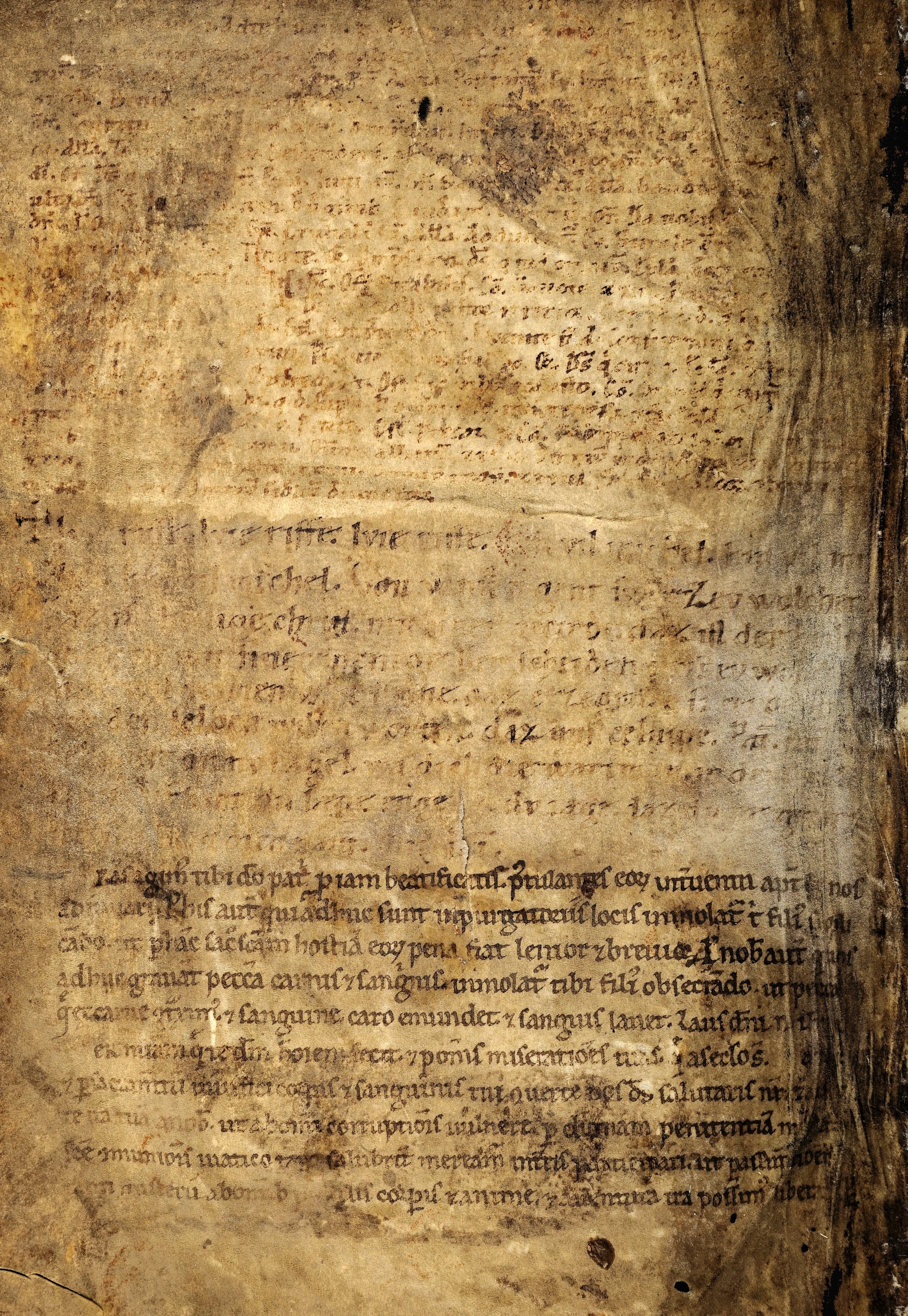 Parts of the old text are difficult to understand today, but it calls on Christ to break apart the black clouds and scatter the white stones of hail before they reach the ground. The Lord’s Prayer is part of it, but the charm also speaks directly to the hail, repeats its commands three times, and calls the formula itself luppe, a word meaning magic or incantation.
It is probably the closest thing we have in this article to an actual surviving weather spell rather than a later description of somebody saying one. It definitely is not just a prayer. Its structure contains elements also found in medieval magical spells: repeated invocations, a direct command against the approaching black clouds, a sacred story used as a precedent, and instructions to recite the Lord’s Prayer. It feels more like they were trying to command it and not just ask for it.
Parts of the old text are difficult to understand today, but it calls on Christ to break apart the black clouds and scatter the white stones of hail before they reach the ground. The Lord’s Prayer is part of it, but the charm also speaks directly to the hail, repeats its commands three times, and calls the formula itself luppe, a word meaning magic or incantation.
It is probably the closest thing we have in this article to an actual surviving weather spell rather than a later description of somebody saying one. It definitely is not just a prayer. Its structure contains elements also found in medieval magical spells: repeated invocations, a direct command against the approaching black clouds, a sacred story used as a precedent, and instructions to recite the Lord’s Prayer. It feels more like they were trying to command it and not just ask for it.
Feeding the wind
They didn’t always just try to fight the weather, sometimes they also tried to feed it. In Upper Austria there was a custom known as Windfutter (wind food). Bread, flour or milk could be left for the wind. Baumgarten recorded one version in which caraway, salt and ash were scattered backwards into the air while the wind was spoken to directly.
“Wind, da hast Salz, Aschn, Kim, Nim's hoam zu dein Weib und Kind.”
Roughly: Wind, here you have salt, ash and caraway. Take it home to your wife and child.
The wind is treated almost like an unwanted visitor. Give it something to take home and perhaps it will leave you alone. It is one of the few cases where we actually know some of the words that were spoken. In so many of the other weather customs, the collectors carefully describe every movement and object and then simply tell us that a spell or formula was said without bothering to write down what it was.
Wetterläuten
The most public form of weather protection was the Wetterläuten (weather ringing). This was no small private ritual where you would sit at home at your altar with a little bell. In some Alpine villages it became part of the community's organisation. The sacristan had to watch the sky and know when to begin. Farmers could pay him in Wetterkorn (weather grain), part of the harvest given in return for keeping watch and ringing when dangerous weather approached. When I first heard about Wetterläuten I thought that it would warn the farmers so they could go out and start their rituals to protect their fields. While researching it I started to understand that the bells themselves were also believed to be able to prevent a storm from entering a valley or drive it somewhere else. One Tiroler story makes that idea wonderfully literal. A farmer heard one witch urging another to push the approaching weather farther. The second replied that she could not move it anymore because “the Ötzer Stier is roaring.” The Ötzer Stier was the local weather bell.
The bells were not the only way people tried to ward off the weather. There was also Wetterschießen (weather shooting). When a dangerous storm approached, people would fire small cannons at it in an attempt to drive the storm away. In Salzburg in the 18th century, these cannons were often loaded with blessed gunpowder. Shooters sometimes even added pieces of a blessed Palmbuschen to the charge (those are the bundles of green branches we talked about in the very beginning of the article - the thing my next door farmer still sticks into his fields). I came across a funny story where Salzburg authorities tried to restrict Wetterläuten and Wetterschießen. Some farmers then complained that the Bavarians could continue shooting their own storms away and push them across the border into Salzburg.
There were also more explicitly magical explanations for what the bells were doing. In parts of Tirol, a particular pattern of ringing was supposed to affect the witches inside the storm clouds. It was said that during the pauses in between the strokes the witches had to hold their breath. If you rang long enough, they might be forced out of the cloud entirely. People took this whole “ring the bell to scare the witch weather away” very seriously. That became very clear in Salzburg during the 1780s, when the Archbishop repeatedly tried to restrict weather ringing. The authorities considered it useless and dangerous. Ringing church bells in the middle of a thunderstorm was, for obvious reasons, not particularly safe. When a storm approached the village of Irrsdorf in May 1789, around twenty people gathered at the sacristan's house and demanded the key to the church tower. The crowd eventually grew to around one hundred or more. When he refused because the ringing had been prohibited, people forced their way in and rang all three bells. Some of the men were later punished for the incident. That is probably my favourite piece of evidence for how seriously all of this was taken.
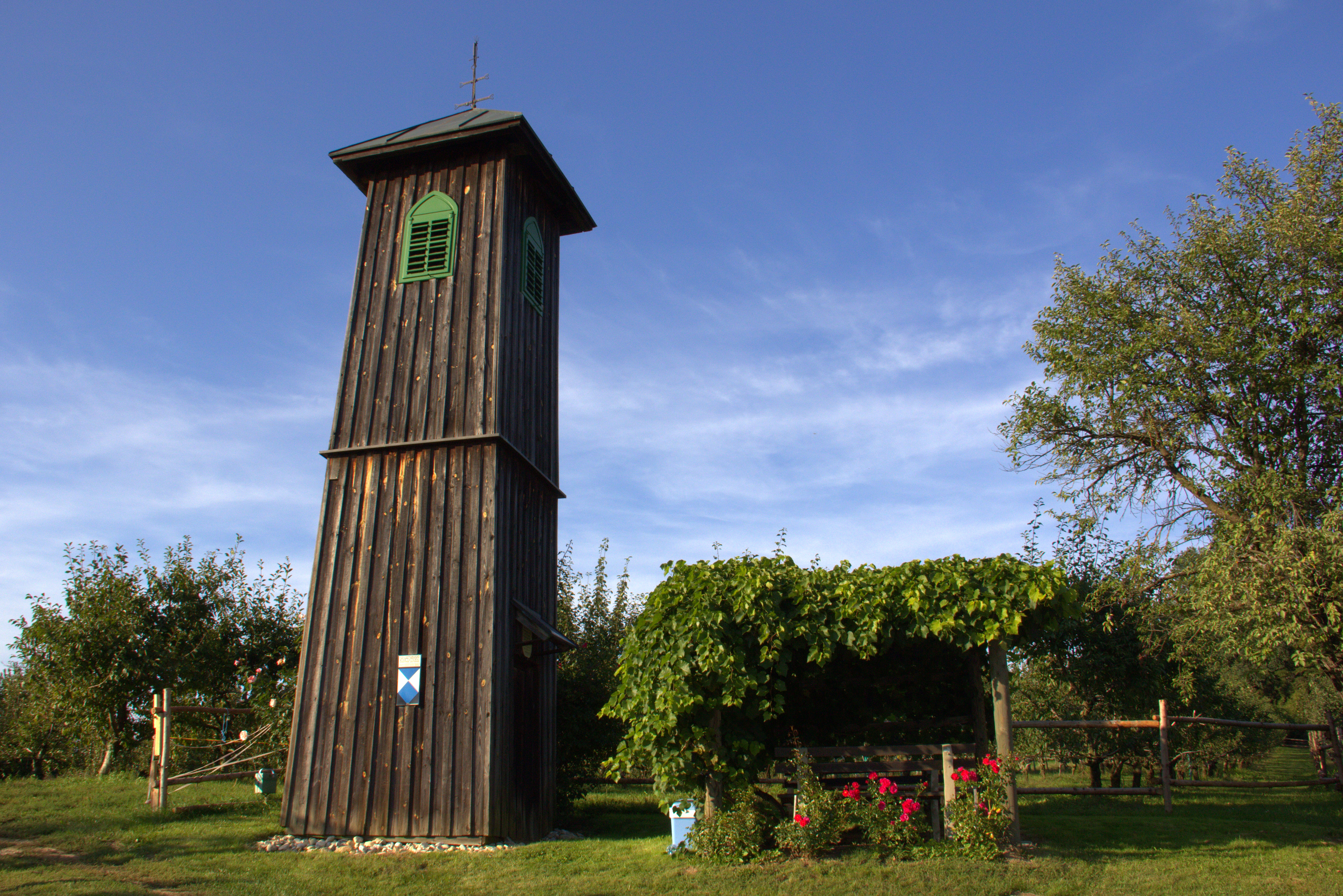
The practice survived much longer than I expected. In the Styrian village of Rollsdorf, a separate Wetterturm stood above the village with its own weather bell (see picture below). The last woman that rang it by hand, Theresia Zeismann, continued until her death in the early 1990s. On days when storms threatened, she stayed near the tower so she could begin ringing in time. The villagers even paid her according to the size of their property just like in the old days (well actually I am not sure if she was paid in grain or in actual money.)
The weather candle
People also burned protective herbs in the hearth, especially ones that had been blessed during Mass on Assumption Day, or lit a black Wetterkerze (weather candle), which had been blessed at Candlemas in February. These candles would often contain an image of the Virgin Mary. The family would kneel around the candle and pray while the storm passed. Bavarian church records actually mention Wetterkerzen as early as the end of the fifteenth century.
So is my neighbour fighting witches?
Most of the really cool weather customs are gone. Nobody in our village, as far as I know, is standing beside a stream preparing nine stones for the next thunderstorm. I have never seen anyone hammer a stake into the field and walk around it three times while reciting a ban either. But the Palmbuschen are still there. Every spring they appear again in the fields around us. Most of the farmers putting them there would probably describe what they are doing as continuing a tradition or asking God for a good harvest. I doubt many of them would appreciate my opening observation that they are practising witchcraft.
Fair enough, but more than 160 years ago, Amand Baumgarten was already recording Palmbuschen being put into Upper Austrian fields specifically to protect them from hail. Today I can walk out of my house and see the same bundles standing in the fields around me. I am not saying my neighbour is fighting witches. I am just saying that if one turns up with a hail cloud, his field is apparently prepared.
Sources
- Keller, Irene and Christian. Glaube? Aberglaube? Volksfrömmigkeit / Gelehrtenmagie: Facetten des (Aber)glaubens in Oberösterreich. Kulturgut Hausruck, 2014.
- Baumgarten, P. Amand. Aus der volksmässigen Ueberlieferung der Heimat: Zur volkthümlichen Naturkunde. Linz: Museum Francisco-Carolinum, 1862.
- Reichel, Rudolf. “Ein Marburger Hexenprocess vom Jahre 1546.” Mittheilungen des Historischen Vereines für Steiermark, 1879.
- Weiß, Andrea. “Wetterschießen und Wetterläuten.” In: Bräuche im Salzburger Land: Vom Frühling bis zum Herbst. Salzburg, 2003.
- Universitätsbibliothek Graz. “Frommer Zauber: Der Seckauer Hagelsegen.” Manuscript Ms. 784, fol. 148v, 12th century.
- J. Otmar. “Hexenküche, Hexensud,” from Ulrich Molitor’s De laniis et phitonicis mulieribus, Reutlingen, c. 1489. Woodcut. Public domain. Via Wikimedia Commons.
- Franz W. “Palm Sunday, Easter, Religion.” Photograph. Pixabay. Pixabay Content License.
- “Seckauer Hagelbeschwörung,” 12th century. Universitätsbibliothek Graz, Ms. 784, fol. 148v. Via Wikimedia Commons.
- DerGraueWolf. “Rollsdorf-Wetterturm 3025.” Rollsdorf, Styria, 2012. Photograph. CC BY-SA 3.0 Austria.
~ PICTURES FROM TOP TO BOTTOM ~