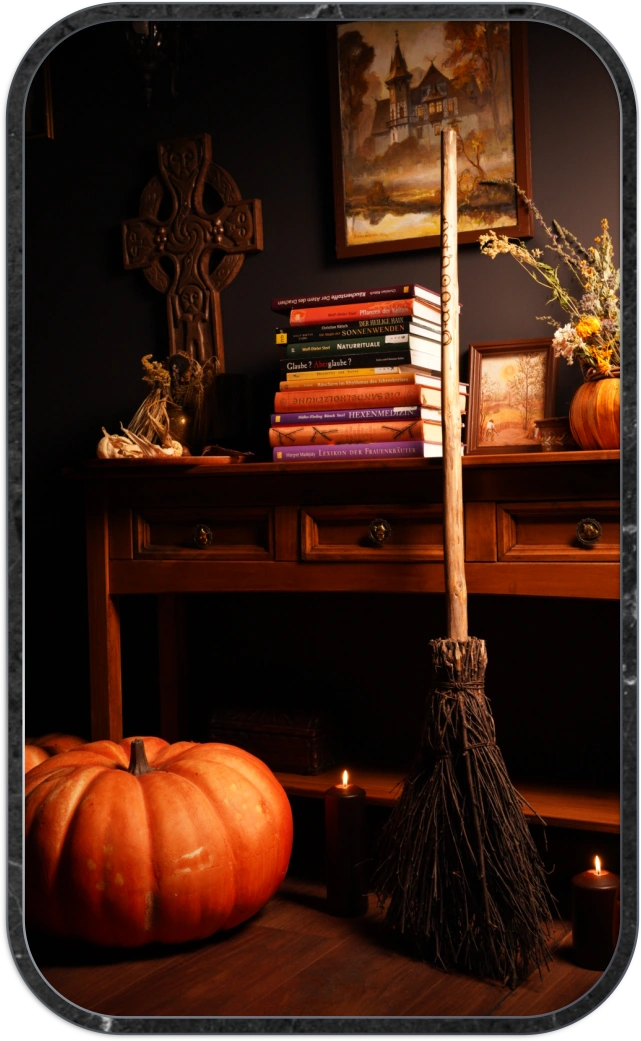
“Die Salbe giebt den Hexen Mut,
Ein Lumpen ist zum Segel gut;
Ein gutes Schiff ist jeder Trog,
Der flieget nie, der heut nicht flog.”
- Goethe, Faust I, “Walpurgisnacht”
“To cheer the witch will salve avail;
A rag will answer for a sail;
Each trough a goodly ship supplies;
He ne’er will fly, who now not flies.”- Goethe, Faust I, “Walpurgisnacht” English translation by Bayard Taylor
I might have been around 10 years old when I read a novel about a girl who lived during the witch trials. To be honest, I can’t remember much about the plot now, but what I do remember is that it sparked my interest in that particular time in history. For me, the thought that the witch hunts happened in the real world and were not just fiction, was pretty much proof enough that there must be something to it. I was born in 1988, so my teen years aligned beautifully with the '90s and early 2000s whimsigoth and witchy era. The Craft, Charmed, Sabrina and Buffy left me yearning for witchcraft to be true. I dressed all black, wore dark lipstick far too young and bought some spell books. Along with some stolen herbs from mom’s kitchen, I went to town. I wanted the magic I saw on TV and read about in books to be real so badly I think I started pretending that it was. In reality, nothing happened. I did not move objects with my mind. I did not see the future. The spirits on the Ouija board were, most likely, teenage girls pushing the glass around while pretending not to. At some point this ‘phase’ ended. I acknowledged to myself that none of this was ever real and moved on from it. There is no magic in this world. It’s all made up. And whatever looks to be magic can be easily explained by science. During the witch hunt times, women were not flying through the night on broomsticks. What was real were the accusations, the torture, and the people who died because of fear, misogyny, and religion.
Fast forward 20 years and here I am writing an article asking the question: did the witches really fly? The image of women riding on objects through the night to meet with the devil in remote places has haunted European culture for centuries. It appears in trial records, demonological texts, folk belief, and literature and was eventually made immortal in one of the most famous scenes in German literature: Goethe’s Walpurgisnacht. In Faust I, Goethe describes witches flying to the Blocksberg (a mountain in Germany) on Walpurgis Night, the night from April 30 to May 1. They arrive from every direction to join the wild gathering on the mountain. Witches flying to a secret gathering in the mountains was not an invention of Goethe’s imagination. He drew from a rich history revolving around nachtfahrende Frauen (night-roaming or night-riding women) who were believed to travel at night with supernatural processions of spirits, goddesses, or the dead.
So where did this idea come from?
There were already stories about women who travelled at night accompanying a supernatural female figure, long before witches were seen as servants of the devil. Depending on the region, female procession leaders had different names. Some called them Diana or Satia others Holda, Holle or Perchta. When I first read about these night-roaming women, I immediately thought of the Wild Hunt. It's an old European image of a loud and terrifying supernatural procession that moves through the night while ordinary people slept. I immediately started researching that connection and came across an article from Ronald Hutton where he writes exactly about this very topic. Hutton points out that, what we now call the Wild Hunt actually combines several different traditions: terrifying hosts of the dead, spectral huntsmen as well as female-led spirit processions. The latter were not always described as evil. In a lot of the stories they visited homes and blessed them if they were clean and properly kept. In some of these accounts the women were said to have travelled through the night physically, in others it was understood as travelling ‘in spirit’ while their bodies never left the bed.
What the Church says about Night-Riding Women
One of the earliest and most influential church-law texts to describe these night-riding women is the Kanon Episcopi It was recorded by Regino von Prüm in the early tenth century. It’s specifically about these female led processions we just talked about a minute ago. It speaks of women who claim that they ride at night with the pagan goddess Diana and a multitude of other women, crossing long distances in the middle of the night. The Kanon Episcopi establishes that, from a Church perspective, these journeys are not real and are merely a dream brought on by evil spirits. This is very different from the later witch trial image of witches physically travelling to the sabbath on brooms, goats, forks, or with the help of flying ointments. This later image evolved when older night-riding traditions were mixed with demonology.
From Dream to Devil’s Pact
In 1487, the inquisitor Heinrich Kramer published the Malleus Maleficarum , known in German as the Hexenhammer (The Hammer of Witches), which would become one of the most notorious witch-hunting manuals of the late medieval period. This is a major turning point for the history of the flying witch. In the Kanon Episcopi women’s night flights were seen as illusions but in the Hexenhammer Kramer pushed against that older interpretation. He argued that the women described in the old canon were not 'true witches' in the later sense, and because of that, the canon could not be used to deny the reality of witches’ flight. It’s funny how he can’t just flat out say that the church's previous assessment was wrong, so he has to come up with this shady definition scam. The reason it was so important for him to find this theological loophole was that by this time the idea that witches gathered at night in remote places was already widespread which in turn raised the question of how they got there. The Hexenhammer now offered an answer and opened the doors to accusing people of physical flight to remote places.
Flying Ointments
Once the idea was born that the witches really physically fly to the sabbath, the question was: how do they do it? One explanation that appears again and again is that of the flying ointment. The witch anointed herself (and often also the object she intended to ride, such as a broom, a trough, or an oven fork) with an herbal salve that was believed to have granted her the power of flight.
Using a salve to be able to fly is a very old concept. In Homer’s Iliad, usually dated to the eighth century BCE, Hera washes and anoints herself with ambrosial oil before travelling from Olympus toward Mount Ida without ever touching the earth. Sounds very much like she made use of a flying ointment to me.
Even though it is an old concept, it was not really widespread until Johannes Hartlieb wrote about it in 1456 (Das Buch aller verbotenen Kunst, Unglaubens und Zauberei). In his book, he talks about women using a salve he called unguentum pharelis to rub onto objects, which they would then use to fly. He also published the first recipe of a flying ointment as far as we know today. Hartlieb’s recipe surprised me because it does not yet contain the later, strongly narcotic nightshade herbs. Its structure is more magical and astrological: Seven herbs are gathered according to their correspondence with the seven planetary days of the week:
Planetary Symbols and Herbs
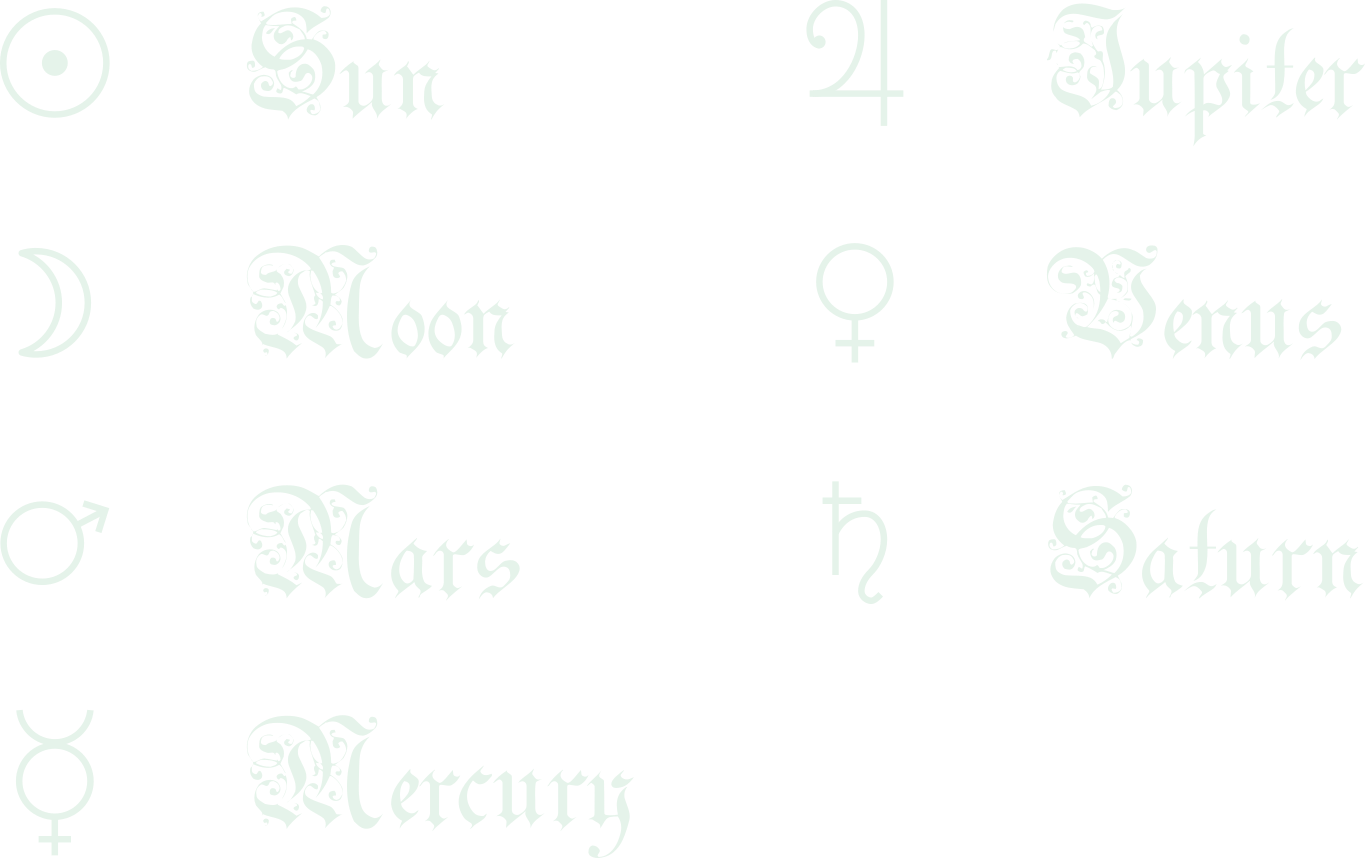
- Sunday (Sun): Solsequium, probably chicory (Zichorie)
- Monday (Moon): Lunaria, probably moonwort (Mondraute)
- Tuesday (Mars): Verbena, vervain (Eisenkraut)
- Wednesday (Mercury): Mercurialis, mercury herb (Bingelkraut)
- Thursday (Jupiter): Barba Jovis, houseleek (Hauswurz)
- Friday (Venus): Capilli Veneris, maidenhair fern (Frauenhaar)
- Saturday (Saturn): unclear in the preserved version of the recipe
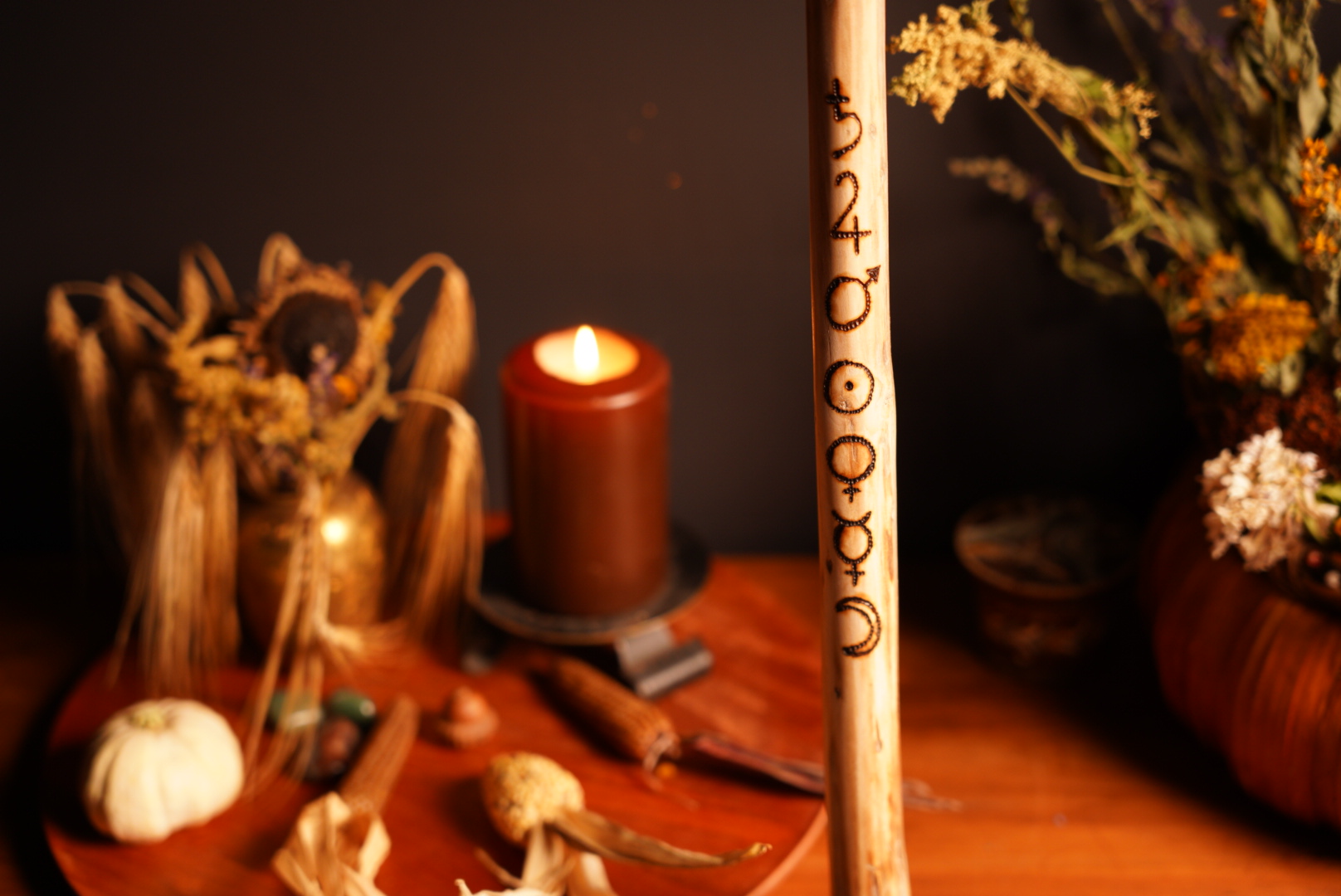
This shows that the ointment was more understood as a ritual substance. You had to gather the right plant at the right time and under the right celestial influence. The power of the ointment came through correspondence more so than from the chemical properties in it. Plant, planet, weekday and intention all played together. Hartlieb’s flying ointment seems much less like a drug recipe and much more like a form of medieval and early modern ritual magic.
Herbs of Sleep and Vision
In later sources, flying ointments became more what we imagine them to be today: some sort of concoction entailing poisonous or psychoactive plants like henbane, belladonna, mandrake, poppy, hemlock, or nightshade. It is not so easy to really find out what exactly these flying ointments entailed or how they were really used back then. Unfortunately, the surviving European sources are either damaged or hostile. They were often written by clerics, physicians, demonologists or judges. Many confessions were made under pressure or torture, which means that anything you read about the use of flying ointments has to be taken with a grain of salt.
The Ointment and the Unbaptised Child
One of the most disturbing details I came across is the repeated claim that witches made their salves from the fat of unbaptised infants. This image appears in witch-hunting and demonological literature but those texts are not neutral descriptions of folk practice. They were written to prove that witches did the most despicable things. The unbaptised child was the perfect horror symbol. Murdered innocence and denied salvation as well as anxieties around childbirth and infant death combined were the perfect recipe for suspicion . Midwives could become especially vulnerable because they were present at births, miscarriages, stillbirths, and infant deaths and thus also had easy access to the babies.
It seems certain however that many people had, for example, poplar ointments at home, to use in a similar fashion as to how we use modern pain meds. These ointments often included nightshade plants, which could lead to hallucinations and vivid dreams. Found in the wrong home, such an ointment could be detrimental. There is one famous story from the 16th century about a Spanish doctor, Andrés de Laguna , who examined an ointment found in the house of someone who was accused of witchcraft. The doctor determined that the salve contained powerful sleep-inducing plants. When he tested it on a woman, she fell into a deep sleep and upon waking up, she reported that she had danced with the devil at the witches’ sabbath.
Another famous experiment was done by Giovanni Battista Della Porta . Together with a number of witnesses, he watched a sorceress rub herself with flying ointment. She fell into a deep sleep and later claimed she was flying across seas and mountains. In reality, she never left the room. Della Porta was a strong advocate for a natural explanation of the witch flight phenomenon, which he also noted in his famous book Magia naturalis from 1558. In his mind, the women definitely did not physically fly through the night. He believed that this was just a vision they had, brought on by the hallucinogenic properties of the plants (not by some demon as the church claimed roughly 650 years earlier in the Kanon Episcopi) The plants themselves deserve their own article as there is a lot of interesting lore about them. But for this article, I am less interested in reconstructing a recipe than in asking what the ointment meant. Was it poison, medicine, fantasy or ritual substance?
Spirit Flight
I personally think Della Porta is partially correct. Certain plants can help induce a state of trance that makes it easier to cross into the other realm but it creates not just a physical reaction in your body. Researching this topic made me immediately think about different shamanic spirit travel traditions, where the soul goes on a journey while the body stays behind. People believed the soul could travel through things like animals, drums, trees, ladders, or boats. To me, this would also tie in really well with the earlier flying ointment recipe without psychoactive ingredients published by Hartlieb. As mentioned before, I believe that these plants can help lift the veil but they for sure are not necessarily needed. A ritualistic salve, prepared according to the right timing and correspondences, can serve the same purpose. It transforms the object it is used on like a broom, trough, stool, rake or oven fork. They were then no longer household tools but rather something that can be used to transport the spirit.
This does not mean that psychoactive plants played no role in ritual spirit travel. Their ritual use among Indigenous peoples is well documented. I did some digging, and Michael Harner, for example, discusses reports of Datura salve preparations among the Yaqui in Mexico, where the plant was associated with ritual visions and experiences of flight, which is reminiscent of later European flying ointment stories.
So, did witches really fly?
I would say they flew in a way that my sixteen-year-old self would have found deeply underwhelming but my twenty-six-year-old self would have found shocking. What do I mean by that? They did not fly in the obvious, in-your-face Charmed kind of way I dreamed of as a teenager. There were no sparks from the fingertips and no broom lifting the body up into the air. But it’s also not worshiping the science gods, like I did in my twenties, when I thought magic was simply nonsense and every old story could be boiled down to superstition and ignorance. The truth, at least to me, seems to be somewhere between the two extremes.
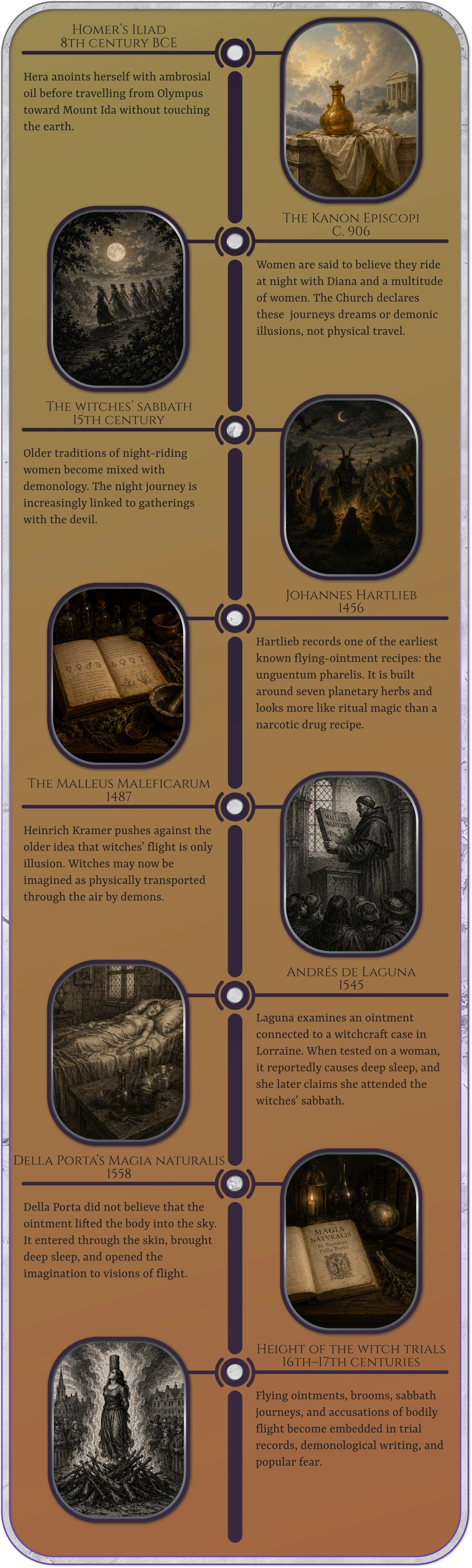
Witches probably did not fly physically through the night to dance with the devil on a mountain top. I feel like it’s more about trance, dream, ritual, altered states, spirit travel as well as the old belief that part of the self could leave the sleeping body and cross into another world. This seems quite disappointing to teenage me, who wanted magic to look like my favorite show. But adult me is amazed by it because it suggests that the old stories were not necessarily true in the literal sense but they were not totally empty either. Below is a timeline of some of the events we will discuss.
Sources
- Harner, Michael J. The Role of Hallucinogenic Plants in European Witchcraft. In Hallucinogens and Shamanism. Oxford University Press, 1973.
- Prieß, Alena. Das Traummotiv im Hexenflug. Eine Realitätsdebatte im Mittelalter und in der Frühen Neuzeit. Master’s thesis, University of Vienna, 2012.
- Hutton, Ronald. he Wild Hunt and the Witches’ Sabbath. Folklore 125, no. 2, 2014.
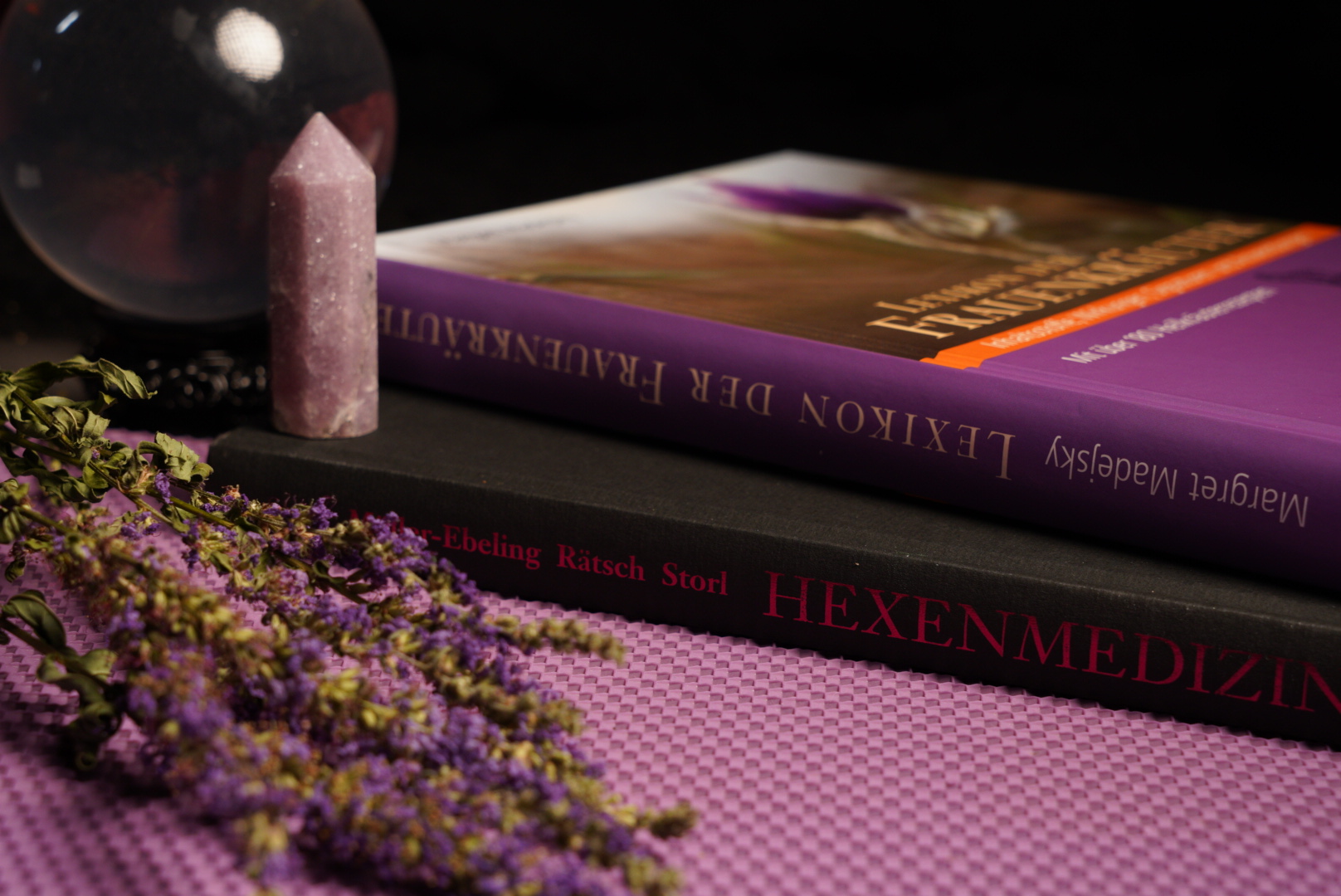
- Müller-Ebeling, Claudia; Rätsch, Christian; and Storl, Wolf-Dieter. Hexenmedizin: Die Wiederentdeckung einer verbotenen Heilkunst. AT Verlag, 1998.